

LED Light Therapy Brisbane
A gentle, no-downtime way to support your skin using clinically studied wavelengths of light. The at-home range Nurse Lisa selected, and uses herself.
Shop the LED RangeRegistered Nurse 18+ Years Experience AHPRA NMW0001471748
 The at-home LED range, hand-selected by Nurse Lisa
Take the light home with you
Clients kept asking Nurse Lisa the same question: is there something I can use between visits? For a long time the honest answer was not really. Most at-home masks were underpowered or overpromised. This is the range she chose in the end, and the one she uses herself.

The Face, Neck & Décolletage Bundle
Your glow does not stop at the jawline. This bundle pairs the LED Face Mask with the Neck, Décolletage and Back device, so the areas that show sun and age first get the same care as your face. Two shaped silicone devices, the same four wavelengths, one considered routine.
Three ways to bring the light home

LED Light Therapy Face Mask
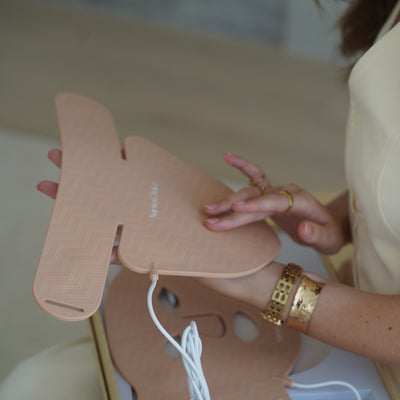
The core of the range. Four wavelengths across 240 LEDs, in flexible silicone shaped to sit against the face. The one to start with, and the one Nurse Lisa uses herself.

LED Face, Neck & Décolletage Bundle
Face plus neck, décolletage and back, in one bundle. Two devices, the same four wavelengths, full coverage below the jawline.

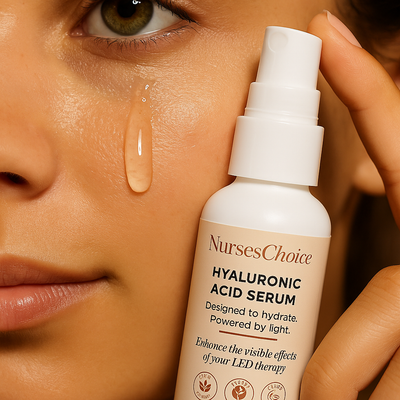
Hyaluronic Acid Serum
The step Nurse Lisa recommends alongside LED. Press it into damp skin straight after a session, while the barrier is warm and receptive.
Why LED is worth the habit
No downtime
Nothing to recover from. Return to your day, and your makeup, straight after.
Completely comfortable
No needles, no heat, no discomfort. Most people find it deeply relaxing.
Suits most skin types
A gentle, non-invasive option, including for sensitive skin.
Supports firmness & tone
Red and near-infrared wavelengths are the most studied for skin quality over a course.
Helps blemish-prone skin
Blue light targets the bacteria associated with congestion and breakouts.
Easy to keep up
Short sessions at home, three to five times a week. The habit is the whole point.
A calm, considered approach to light
LED light therapy is one of the gentlest things you can do for your skin. It uses specific, clinically studied wavelengths of visible and near-infrared light, with no needles, no downtime and no discomfort. The range on this page was chosen by Nurse Lisa, a Registered Nurse with 18+ years of clinical experience, for people who want to keep that habit going at home. She uses it herself, and she is happy to talk it through with you at your next skin consultation.
How LED Works
Clarity
Blue wavelengths are often selected for congested, blemish-prone skin, and have been studied for their effect on the bacteria associated with breakouts. A calm, non-invasive step.
Calm & Even
The gentlest of the four. Yellow wavelengths sit in the visible range and are chosen for skin that reads as red or uneven, for a quieter, more even-looking tone.
Comfort & Glow
Red wavelengths are absorbed in the upper layers of the skin and are the most widely studied for supporting the appearance of comfortable, even, healthy-looking skin.
Deeper Support
Near-infrared light reaches further into the skin and is studied for its role in the skin's own repair and renewal processes, supporting a firmer-looking, more resilient complexion over a course.
What the research explores
LED light therapy (also called photobiomodulation) is a well-established, non-thermal modality used across dermatology and aesthetics. A growing body of research has examined how different wavelengths interact with the skin.
Skin quality & collagen
In a controlled trial, participants treated with red and near-infrared light reported improved skin complexion and feel, alongside measured increases in intradermal collagen density versus untreated controls.1
A broad, gentle modality
Clinical reviews describe LED phototherapy as a safe, non-invasive option used to support a range of skin concerns, valued for having little to no downtime and a strong tolerability profile.2
Blemish-prone skin
Blue light has been studied in the management of mild-to-moderate breakouts, for its action on Cutibacterium acnes, the bacteria associated with congestion and blemishes.3 Worth being precise: the most cited trial used a 415nm blue light, and this mask emits 460nm. Read it as background on the wavelength family, not as a result for this device.
A supportive step, not a cure
LED is best thought of as one supportive part of a considered skin plan. Nurse Lisa will always be honest about what it can and cannot do for your skin specifically.
- Wunsch A, Matuschka K. A controlled trial to determine the efficacy of red and near-infrared light treatment in patient satisfaction, reduction of fine lines, wrinkles, skin roughness, and intradermal collagen density increase. Photomedicine and Laser Surgery. 2014;32(2):93-100.
- Ablon G. Phototherapy with light-emitting diodes: treating a broad range of medical and aesthetic conditions in dermatology. The Journal of Clinical and Aesthetic Dermatology. 2018;11(2):21-27.
- Papageorgiou P, Katsambas A, Chu A. Phototherapy with blue (415 nm) and red (660 nm) light in the treatment of acne vulgaris. British Journal of Dermatology. 2000;142(5):973-978.
Four calibrated wavelengths
The mask delivers four separate wavelengths of light across 240 LEDs, at a measured output of 53 mW/cm². Each wavelength is set to a specific range chosen for its studied benefits to the skin, so you can match a session to what your skin is working toward rather than take a one-size approach.
- Blue light 460 nm — chosen for congested, blemish-prone skin; blue wavelengths are studied for their action on the bacteria associated with breakouts.
- Yellow light 590 nm — the gentlest of the four, selected for redness and for evenness of tone.
- Red light 630 nm — absorbed in the upper layers of the skin; the most widely studied range for supporting a comfortable, even, healthy-looking complexion.
- Near-infrared 850 nm — reaches deeper into the skin, studied for its role in the skin's own repair and renewal.
240 LEDs · 53 mW/cm² · flexible silicone · certified to Australian electrical safety standards (SAA). If you are not sure which setting suits your skin, ask Nurse Lisa at your next visit.
Who it suits, and who should ask first
One of the reasons Nurse Lisa chose this mask is that it is genuinely easy to share. It is shaped to fit most adult faces, the settings are simple, and a session is short enough to fit into an evening. Households tend to use it for different reasons: a parent working on firmness and even tone, a teenager whose skin is prone to congestion, or simply as a quiet twenty minutes at the end of the day.
- Most adult skin. The mask is non-invasive and does not use heat, so it suits most skin types, including sensitive skin.
- Teenagers, with a parent involved. We suggest LED for younger skin only with a parent supervising sessions, and only once a parent is satisfied it is appropriate. If a teenager's skin is causing them distress, a GP or dermatologist is the right first call, not a device.
- Consistency matters more than intensity. The research on LED is built on regular, repeated sessions. Three to five short sessions a week will do far more than an occasional long one.
- It complements a plan, it does not replace one. An at-home mask is a maintenance tool. It is not a substitute for a professional treatment, and it is not a substitute for medical care.
Please speak with your doctor before using LED at home if you are taking isotretinoin (Roaccutane), doxycycline, St John's Wort or any other medicine that increases light sensitivity; if you have lupus, porphyria or another photosensitive condition; if you have epilepsy or are sensitive to flashing light; if you are pregnant; or if you have any undiagnosed lesion or pigmented spot on the treatment area. Always use the supplied eye protection, and follow the manufacturer's instructions. If you are unsure whether the mask is right for you, ask Nurse Lisa at your next visit. She would far rather you asked.
LED questions, answered
Does LED light therapy hurt?
Not at all. There are no needles and no heat. You rest comfortably with the mask on and your eyes protected, and most people find it one of the more relaxing twenty minutes of their week.
Is there any downtime?
None. LED is non-invasive, so you can return to your day, and reapply makeup, straight afterwards.
How often should I use it?
LED is a supportive, ongoing step rather than a single fix. Three to five short sessions a week is the rhythm the research is built on, and it will do far more than an occasional long one. If you would like a rhythm matched to your skin specifically, ask Nurse Lisa at your next skin consultation.
How long until I see anything?
LED is a slow, cumulative treatment, and honesty matters more here than enthusiasm. With consistent use of three to five sessions a week, most published research looks at changes over roughly eight to twelve weeks. If a device promises you a transformation in a fortnight, be sceptical of the device.
Can the whole family really share one mask?
Yes. It is flexible silicone with adjustable straps, so it fits most adult faces, and it wipes clean between users. Different people will use different settings for different reasons, which is part of the appeal. We do suggest a parent supervises any use by a teenager, and that anyone with a skin condition under medical care checks with their doctor first.
Shop the NursesChoice range
Every NursesChoice device and product stocked at The Glow Co. Aesthetics, hand-selected by Nurse Lisa. Stock is limited and held at the clinic in Gordon Park.
3 products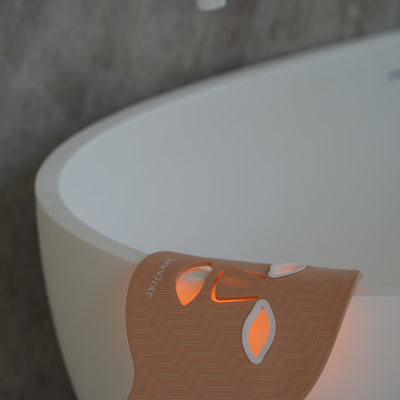
Not sure where to start?
Nurse Lisa selected this range and uses it herself. If you would like it matched to your skin, book a skin consultation at The Glow Co. Aesthetics, Gordon Park.